Hasn’t he been there almost every year? Is there any event or development that you don’t feel the need to “pump up”? It’s a shame you didn’t pursue penny stock promotion as a full time gig. Or did you?
1 Like
mrbubba, thanks for outlining most of MC’s bragging rights. 
Auryn announces participation at the PDAC this year with more enthusiasm than in prior years. MC has far more accomplishments under his belt than a few grimm ppl here are able to grasp as of yet.
“…We are looking forward to this opportunity to share with you the latest developments and insights on our company. It promises to be an exciting time.”
Neither you or BB are “pumping up” anything for this March 2026 event, Auryn’s accomplishments to-date speak for themselves. Speculating that further announcements could be forthcoming is a no-brainer. 
5 Likes
There is a 0.00% chance that any instiutition would look at, let alone investment in this stock. This is not an opinion but I’m happy to give you any sort of odds that there will not be instititional investors filing ownership in AUMC this calendar year. This would be based on the folowing factors:
-
Liquidity: while you might celebrate 7 million shares in the float it will need to be speculative retail investors to accumulate shares b/c no institutions (let alone HNW individuals) could buy enough shares to make it worth their while. Nor be comfortable they could get out.
-
This is a penny stock. No institution would take the risk. If something went wrong the PM would and should lose their job.
-
The company doesn’t issue legitimate, industry standard financials.
-
The company hasn’t come anywhere close to disclosing key details that would allow an intelligent investor to assess the investment. One example: terms of the debt financing/service agreement.
-
No resource, no mine life, no mine plan, no feasability study. Nowhere near enough current information to speculate on grades, tonnage, mineralization, possible cash flows. No way to value the investment. No way to assess the risk. This is a lottery ticket trading at at $150M valuation!
While some may lean on some colorful commentary (wild arss guessing) to assign price targets on a penny stock message board, the shareholder base will be limited to retail holders until 1-5 are addressed. Will that ever happen? There’s always a chance but you’ve got a VERY long way to go.
1 Like
“Along with this week’s photos, AURYN is happy to report we’ve received permit approvals for the tailings pond and the mill.” → https://x.com/aurynmining/status/2025307971358499321?s=20
Plus new pictures
16 Likes
Thank you for sharing, cornhuskergold! 
This week’s pictures (for Madmen and others).
Feb 17 - transport/delivery of 3 generators (650KVA) and 2 compressors (26kW & 75kW) to Fortuna.
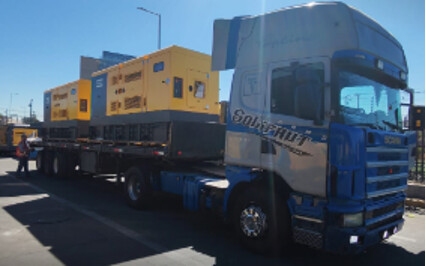
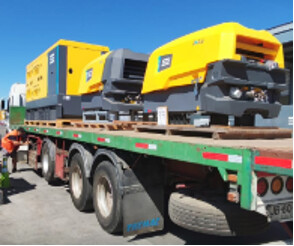
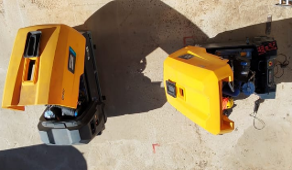
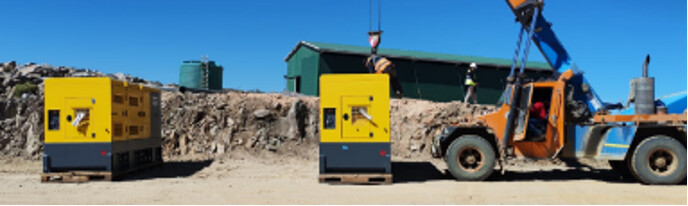
Feb 18 - place generators and anchor, scaffolding works, stairs support, continue ball mill liner tightening.
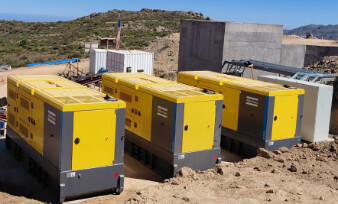
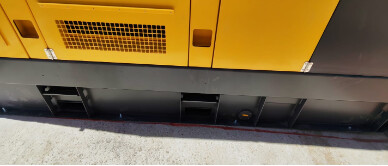
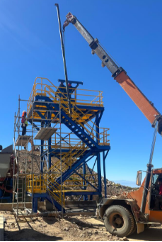
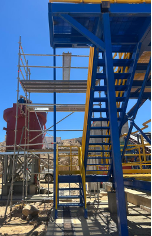
Feb 19 - continue installation of various roller stations and impact rollers on conveyor systems, fabrication and installation of stainless steel reducers for hydrocyclone discharge boxes, install flanges and bolts.
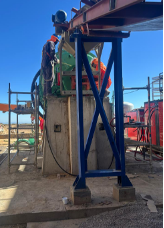
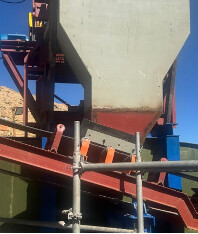
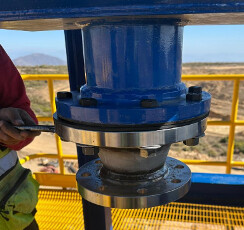
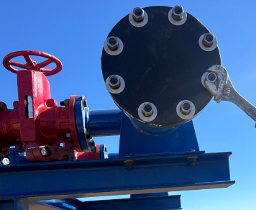
Feb 20 - installation of mill discharge chute, collection distribution bins, mill chutes (pulp and trommel), installation and connection of piping - ball mill to hydrocyclone, finish mill liner bolt tightening, motor alignment, cone crusher lubrication hose installation.
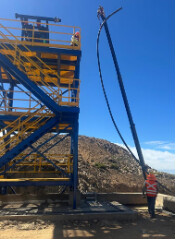
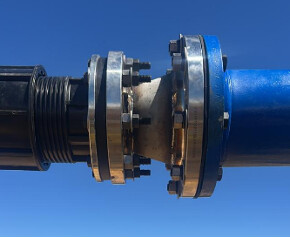
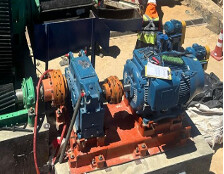
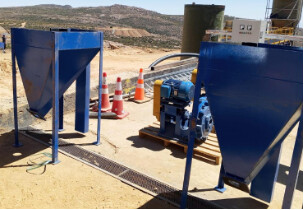
Looks like heavy duty equipment to me - not like the stuff Parker Schnabel has on “Gold Rush”!
8 Likes
Hey BB, if they have permits for the mill and tailings pond, does that mean they can start with the dialing-in process?
1 Like
One thing I’m curious about… i know that the electrical final phase can be done very quickly once operations are in place…. Has electricity wires been installed to the property or are they relying on diesel fed generators… which is a huge factor.
1 Like
Generators. It would cost them upwards of a million $ to connect to a grid. Yes, this is another very large factor in determining ASIC.
1 Like
Another great accomplishment today!
1 Like
Three generators which looks like 2400 hundred gallons each, which in my experience usually two online with a back up running full capacity is about 3500 to 4000 gallons per day… that is a true value
I’ve seen projects that have taken 3000 thousand gallons weekly but when rampt up takes 3000 thousand daily…. Since the is one of the fields i am in would love to be a supplier..
1 Like
GC,
I also have some experience with how much diesel those generators would use and your estimates seemed very high to me; I think a factor of 10X off.
Ran a check with AI:
A 100 ton per day (tpd) gold flotation plant typically processes 100 tons of ore daily. The power generation capacity required depends on the total electrical demand of the plant, which varies based on ore type, grind size, equipment efficiency, and whether the plant includes only flotation or a full circuit (crushing, grinding, flotation, thickening, etc.).Gold flotation plants are energy-intensive, primarily due to grinding (comminution), which often accounts for the majority of usage in mineral processing. Flotation itself is relatively low-energy compared to grinding.Typical Power Consumption EstimatesFrom industry data and studies on gold ore processing (flotation-based circuits):
-
Specific energy consumption for full gold flotation/concentration plants often ranges from 15–40 kWh per ton of ore (or higher for harder ores requiring finer grinds). Older references cite 12–20 kWh/ton for flotation alone, but full circuits (including grinding) are commonly 20–30+ kWh/ton.
-
For gold ores, comminution + flotation can be around 18 kWh/ton in some modeled cases, but real-world averages for similar plants trend higher (25–35 kWh/ton) when including auxiliaries like pumps, agitators, and dewatering.
-
For a small 100 tpd plant, total installed/connected power is often in the range of 300–800 kW (based on examples like fluorite/analogous flotation plants at ~400 kW for similar small scales, and gold CIP/CIL references around 300–600 kW for 100 tpd).
Assuming a conservative mid-range average of 25–30 kWh per ton of ore for a typical gold flotation plant:
-
Daily energy use: 100 tons/day × 25–30 kWh/ton = 2,500–3,000 kWh/day.
-
Assuming continuous 24-hour operation (common for such plants), average power demand: 2,500–3,000 kWh / 24 hours ≈ 100–125 kW average load.
-
However, peak/installed capacity needs to account for motor starting surges, auxiliaries, and a safety margin (typically size generators at 1.5–2× average load or more). Installed power generation capacity would likely need to be 200–500 kW (or more conservatively 300–600 kW) to reliably run the plant, depending on the exact circuit and efficiency.
For remote/off-grid sites, diesel generators are common, often oversized for reliability and to handle variable loads.Diesel Fuel Consumption for GeneratorsDiesel generators typically consume fuel based on load:
-
A rough industry rule of thumb is ~0.07–0.1 gallons of diesel per kWh produced (or about 0.25–0.4 liters/kWh), with efficiency best at 70–80% load (~0.08 gal/kWh average).
-
More precise charts show:
-
At full load: ~0.06–0.09 gal/kWh for larger units.
-
At 50–75% load (typical operating range): ~0.08–0.1 gal/kWh.
-
Using ~0.09 gallons per kWh as a practical average for mining/generator applications:
-
For 2,500–3,000 kWh/day: 225–270 gallons per day.
-
This equates to roughly 7,000–8,000 gallons per month (assuming 30 days), or more if the plant runs less efficiently or includes higher grinding demands.
Fuel use can vary ±20–30% based on:
-
Generator size and model (larger units are more efficient).
-
Load factor (underloading increases consumption per kWh).
-
Altitude, temperature, and maintenance.
For a precise figure, a plant-specific energy audit or supplier quote is ideal, as ore hardness (e.g., Bond work index) can swing grinding power significantly. In remote gold mining operations, diesel often represents a major operating cost, so hybrid renewables (solar/wind + diesel) are increasingly considered to reduce fuel needs.
8 Likes
Baldy,
I would point out there are already power lines that run up to the top of the Alto. We have seen pictures of them before. I believe they power some communication towers at the very top. Based on memory of what the power lines looked like, I’m sure they would need to be upgraded to handle all the new power requirements on the mountain but at least there is already some sort of power line easement that already exists.
9 Likes
How long will it take to see a list of debtors which were to filed by Feb 15th and how much they carved out?
2 Likes
Hope it wasn’t much since a lot of them were issued fraudulently.
1 Like
If there’s existing infrastructure in place it will clearly close a lot less to connect to the grid. All about distance as you know. I have no idea as to the quality of the existing lines up there. For such a small plant the expense isn’t justified at this stage but could be warranted down the line as it does make a big difference in costs. I’d guess, if they can reach a continuous state of profitability over several quarters it may be pursued.
2 Likes
Baldy,
Some clarification. Per 2015 Finanical Report for Medinah, “A 220-volt power line now services the entire plateau claims area.”
I recall photos of the power lines I think where it crossed one of the Alto access roads but couldn’t find the photo.
When I checked a recent photo of the repeater station (See below-is that Juan? ha.) on top of the mountain; it is evident that it is solar powered so I’m not sure where the power lines actually go to.
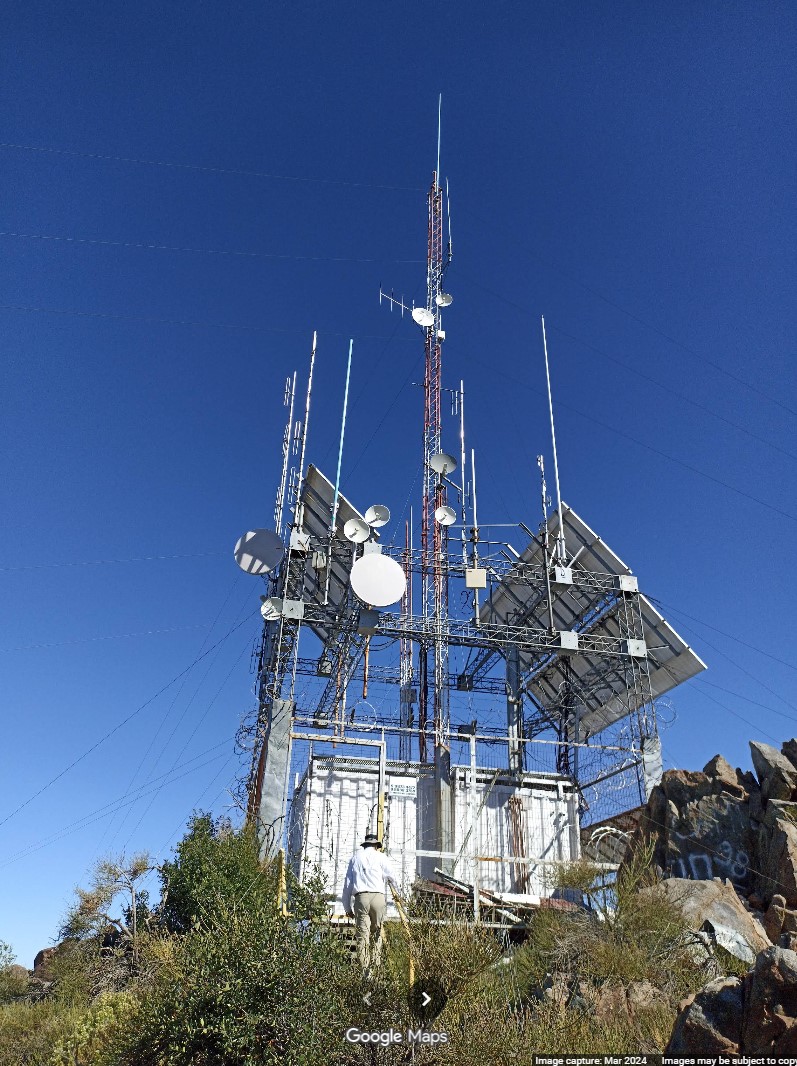
5 Likes
If you look at the power grid map of Chile, it does show (2) 220 Volt lines at or near the Alto. (I marked the approximate location in red.) You can also see power lines running to various big mining projects in the Andes as well on this map.
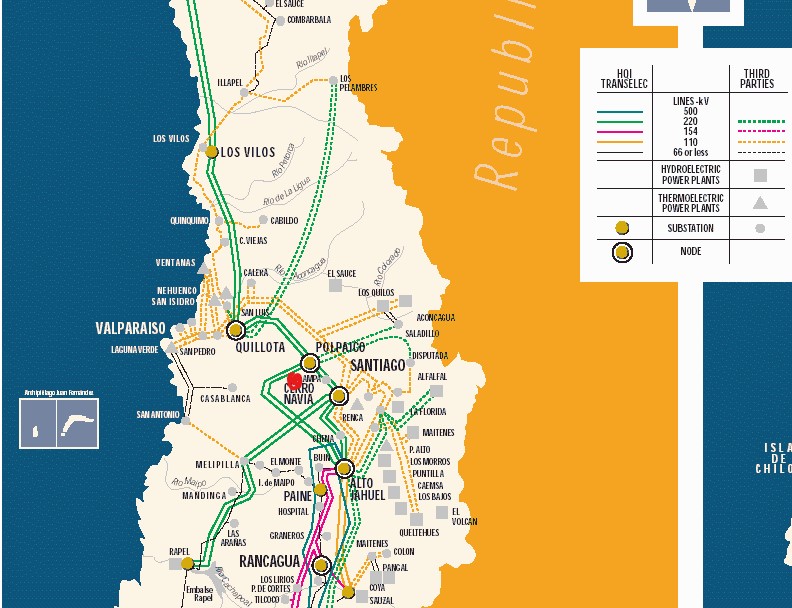
8 Likes
Will there be an official release since they received the permits?
- Receipt of the final operating permits for the flotation plant and tailings facility, followed by an official announcement
4 Likes
Based on their installing three generators its safe to assume they will initially be relying on them for power. Down the line they could have connectivity to the grid subsidized via longer term power purchase agreements. They wouldn’t get subsidized on a million $ cost outlay but it sounds like it could be considerably cheaper given proximity. They will need to hold onto a least one or two generators for back up either way.
1 Like