One concept that I haven’t heard being discussed on this forum is that of a “pilot plant”. Many of us recall how Maurizio articulated at the “informational meeting” Auryn hosted in Las Vegas, that his goal was to become a “mid-tier miner”. This term is a bit ill-defined, but it usually implies a producer producing a minimum of perhaps 250,000 ounces of gold per annum. In the analysis I posted above, Auryn was THEORETICALLY able to generate those kinds of earnings while producing only 13,200 ounces per annum. If Maurizio is going to be able to reach that goal, he’s got a lot of work to do.
Many financiers and young gold producers follow a “pilot plant” concept early on in PRODUCTION. The financier agrees to put up, let’s say, $4 million in order to fund a “pilot plant” with a de minimus “nominal daily throughput” of perhaps 100 Tonnes per day. The strategy being followed is referred to as a “proof of concept”. Before the financier is willing to advance any more cash, the junior miner is forced to provide “proof of concept” by making a handy profit with a scaled-down plant. What this approach does is to “DE-RISK” the project from the point of view of BOTH the financier and the junior producer.
With the explosion in the prices of the metals being sold, a lot of the “DE-RISKING” has already occurred. The concept of the project being “ECONOMICALLY FEASIBLE” becomes a no-brainer. If, on the other hand, the price of gold was $1,000 per ounce and the project’s AISC was $950 per ounce, the junior explorer would no doubt be forced to take 4 or so years to execute an extensive diamond drilling campaign and a series of feasibility studies. The damage incurred by the junior miner’s SHARE STRUCTURE might be irreparable.
If the junior miner did not need the technical superiority or financial resources of a major miner, then it would not be FORCED to “DE-RISK” the major miner. If the junior miner had a CEO willing to advance all of the cash needed to put the project into production, while charging zero interest, then if there was enough “geologic certainty” present from the prior geological studies, the junior miner would be silly to take 4 years off and execute the drilling and the studies if the price of the metals was on an absolute tear.
Note that the financier willing to put up the $4 million still needed to be “DE-RISKED” because that’s a lot of money. Maurizio tends to hold his cards very close to his vest. We shareholders don’t know what exactly the financiers know that we don’t know. We can recall a press release from Auryn management that they “are in possession of detailed financial studies” on the prospects for the success of the ADL project. I asked management if we shareholders could gain access to those studies. I was told that first management wants to run a certain tonnage of ore through the froth flotation plant in order to confirm the accuracy of those studies. Then they would be more than happy to share the results and the studies. For now, we shareholders have the consolation prize that whatever those studies revealed, it was enough for the financiers to cut a very large check.
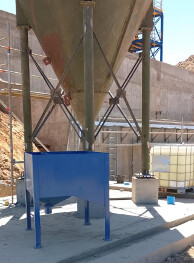
I can’t overemphasize the fact that a 100 TPD froth flotation “pilot plant” is MINISCULE when compared to the averages. Yet, you saw the earnings projections from a tiny little plant like that. When the engineers design a “pilot plant”, they incorporate provisions that would allow the rapid ramp up of production if the economics confirm the “proof of concept”. Ramping up production can occur in a “bolt-on” fashion by adding “flotation cells” and or “flotation columns” in a modular fashion. If the various operational sites being put into production involve the mining of near surface “oxide ore” then an “oxide circuit” can be added in parallel to the froth flotation circuit used to process “sulphide ores”. I have no idea what kind of “multiple” of 100 TPD might be in the works, but you did get a glimpse of what a 100 TPD plant can generate in terms of earnings. The incremental additions are much more efficient in generating earnings because the infrastructure is already in place. With the prices of the metals where they are, somebody is likely going to be more than willing to aid in ramping up the production rates under very favorable terms.
What do we know about our “partners” on this project? “Ameco, SA” is acting as our “mine operator”. They used to be a branch of the engineering behemoth “Fluor” until they were taken out by “Stracon”. “Stracon” acts as the mine operator for 51 mining projects in Chile, Peru, Colombia, and Mexico. “Stracon” is in turned owned by “The Ashmore Group” out of London. They have $65 BILLION in “assets under management”. They specialize in “emerging market” investments. The institutional investor that recently gave Auryn a $4 million check is known as “Strategic Investments, SAC” or “SISAC”. They are an “AFFILIATE” of ASHMORE/STRACON/AMECO,SA. Auryn is “in bed” with some pretty big hitters capable of writing some very large checks.
In this white hot sector of ours, the big money is certainly not going to be made loaning out $4 million at 8% interest. You might remember Dr. Helmut Mischo, Auryn’s collaborator from Freiberg, Germany, mentioning in an interview that once Auryn gets their new FF plant “dialed in”, ramping up production will be very “STRAIGHTFORWARD”. It will be interesting to see what kind of “multiple” of a 100 TPD nominal throughput Auryn can pull off.
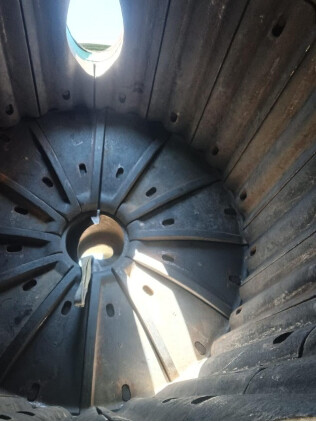
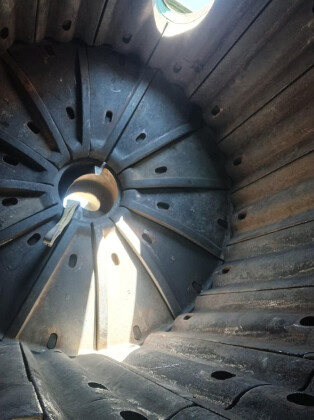
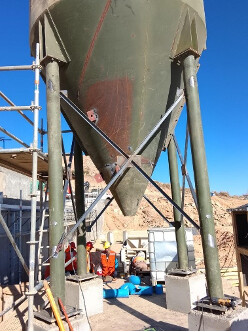
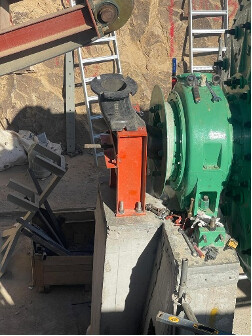
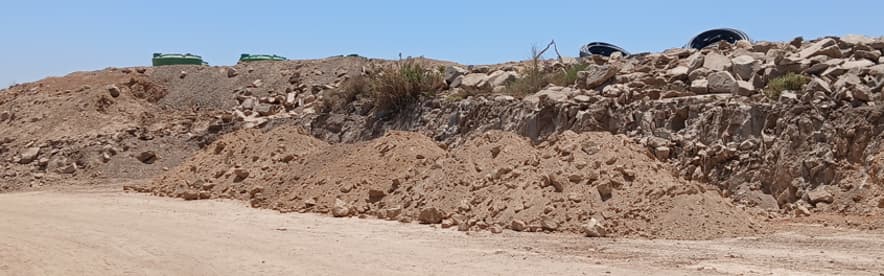
If you do the math, it will take 3 operational sites, each doing 1,000 Tonnes per month (33 Tonnes per day) to keep the 100 TPD pilot plant busy. Don’t forget the 60,000 Tonnes already mined, stockpiled and “segregated by grade”. Yet Auryn has referenced about 8 planned operational sites each producing 1,000 Tonnes per month. For FF plants, it is not atypical for a miner to exceed the “nominal initial throughput rate” which is set by the manufacturer, not the miners. I can’t help but think that the 100 TPD nominal daily throughput metric isn’t likely to be around for very long. Below is the answer to an AI query asking what is the size of the “average” FF plant used in the mining sector. The short answer appears to be in between 500 and several thousand TPD for a medium-sized plant:
“The throughput of a froth flotation plant varies significantly depending on the scale of the mining operation, typically ranging from as low as 25–100 tonnes per day (tpd) for small-scale, modular operations to over 100,000 tpd for large-scale copper porphyry operations. A typical medium-sized plant might handle 500 to several thousand tonnes per day, with modern large-scale, industrial operations focusing on high throughput.
Key Throughput Data by Operation Size:
Small/Standard Units: 25–250 tonnes/day.
Example Industrial Plant: 500 t/h (roughly 12,000 tpd).
Large-Scale Copper Porphyry: Often designed for 200,000 tpd or more.
Typical Gold/Base Metal Plant: 900 tpd to 2,500 tpd (e.g., 2,210 tpd in a 2025 mining report).
Factors Influencing Throughput:
Cell Size: Modern mechanical tank cells have increased in capacity to over 600 m³, reducing the number of cells needed for high throughput.
Carrying Capacity: The ability of the foam to carry concentrate (often 0.8–1.5 t/h·m² for roughers) limits throughput.
Feed Characteristics: Ore grade, mineralogy, and particle size (typically 10-100 µm for minerals) dictate the necessary retention time.
Number of Cells: A bank typically consists of 5–9 cells to manage high throughput.
Large copper mines often push for high throughput (above 1.5 t/h·m² in roughers) to maximize efficiency, while more complex or lower-grade ores may require lower throughputs to maintain recovery.”

 Spot on, mrbubba. It only took nine months for [him] to voice such strong opinions about MC. A clever reply to you with the same biting idiolect. I had to do a double-take on the name handle